
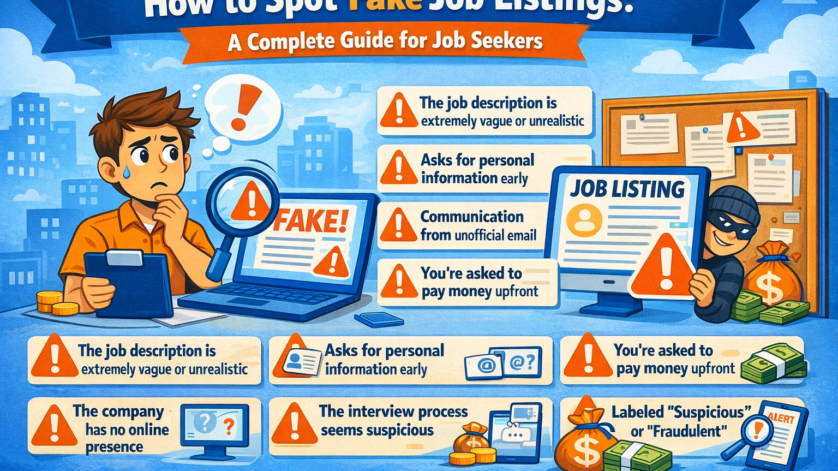
If you’re actively searching for a new role, one of the most important skills you can learn is how to spot fake job listings. Scammers target job seekers because they know people are eager, hopeful, and often willing to share personal information. Fake job ads can cost you time, money, and even put your identity at risk. Understanding the red flags can protect you and ensure your job search stays safe and productive.
Why Fake Job Listings Are Increasing
With remote work on the rise and job applications shifting fully online, scammers have more opportunities than ever to create convincing-looking job posts. They often copy legitimate job descriptions, impersonate real recruiters, or use official-sounding company names to appear credible. This makes learning how to spot fake job listings essential for anyone navigating the modern job market.
Below are the most reliable signs to watch for.
The Job Description Is Extremely Vague or Unrealistic
One of the easiest ways to identify a scam is by evaluating the job description. Real employers include specific job duties, required qualifications, and clear expectations. Fake listings often use:
- – Overly generic phrases
– Excessive hype (“unlimited earnings!”, “no experience needed!”, “instant hire!”)
– Minimal details about responsibilities
If the job sounds too good to be true, trust your instincts.
They Ask for Personal Information Early
A legitimate company will never ask for sensitive information early in the hiring process. Be cautious if a job listing—or the recruiter connected to it—requests:
- – Your Social Security number
– Bank account details
– A photo of your ID
– Your full date of birth
Learning how to spot fake job listings includes recognizing when a scammer is trying to steal your identity rather than evaluate your qualifications.
Communication Comes From Unofficial Email Addresses
Authentic recruiters use corporate email addresses, not free accounts like Gmail, Yahoo, or Outlook. For example, a real company is likely to use an address like name@company.com, not company.recruiting@gmail.com.
Scammers often use:
- – Misspelled company names
– Extra numbers or letters in the email
– Free email service providers
Always verify that the domain matches the official company website.
You’re Asked to Pay Money Upfront
If there is any request for payment, it is a scam. Period.
Scammers may frame the payment as:
- – A fee for training
– A background check payment
– Software or equipment requirements
– A “refundable deposit”
Real employers never ask candidates for money.
The Company Has No Online Presence
Before applying, take a moment to research the company. Look for:
- – An official website
– A LinkedIn company page
– Reviews on business directories
– A legitimate address and phone number
If you find no trace of the company—or the website looks hastily made—it’s a major warning sign. Part of learning how to spot fake job listings is researching the employer thoroughly before engaging.
The Interview Process Seems Suspicious
Fake employers often bypass normal hiring processes to “hire” quickly. Beware if:
- – You’re hired after one brief message
– The interview happens only via chat apps like WhatsApp or Telegram
– Interviewers avoid video calls
– They rush you into making decisions
Legitimate employers take time to vet candidates properly.
The Salary Is Unusually High for the Role
Scammers often lure victims with unrealistically high salaries. If an entry-level role promises earnings far above market rate, it’s likely not real.
Compare the compensation with similar job postings. A big discrepancy is a red flag.
Job Boards Label It as “Suspicious” or “Fraudulent”
Many job platforms now have built-in detection tools and will flag listings that appear questionable. If you see a warning, take it seriously.
Final Thoughts
Understanding how to spot fake job listings is essential in today’s digital job market. By recognizing the warning signs—vague descriptions, suspicious email addresses, unrealistic salaries, or any request for personal information—you can protect yourself from scams and focus on legitimate career opportunities. Stay alert, research every employer, and trust your instincts. A real job will never require you to compromise your safety.
Before applying to any position, it’s crucial to verify a remote job listing before applying to ensure it’s legitimate and avoid potential scams.