
Remote work has opened the door to incredible opportunities, but it has also attracted scammers looking to take advantage of job seekers. As more people search for flexible, work-from-home positions, remote job scams have become increasingly sophisticated—and harder to spot.
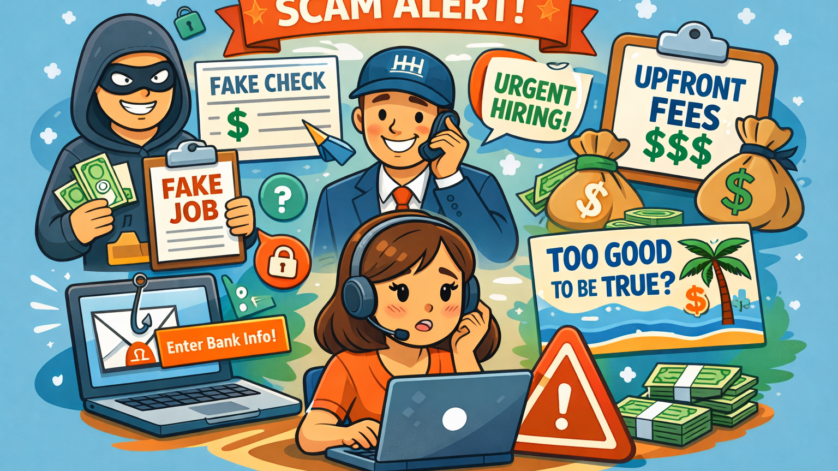
Understanding the most common types of remote job scams can help you protect your time, money, and personal information. Below, we’ll break down the biggest red flags to watch for, including fake checks, upfront fees, impersonated companies, and “too good to be true” job offers.
Fake Check Scams
One of the most common work-from-home scams involves fake checks.
How the scam works:
A scammer offers you a remote job—often as a virtual assistant, customer service rep, or data entry worker. Shortly after you’re “hired,” they send you a check and ask you to deposit it. The money is supposedly for office equipment, software, or training materials.
They then instruct you to:
- – Send a portion of the money back
- – Pay a “vendor”
- – Buy equipment from a specific website
Days or weeks later, your bank discovers the check is fake. The funds are reversed, and you’re responsible for the loss, even though the scammer has already disappeared.
Red flags:
- – Being sent a check before doing any real work
- – Pressure to deposit the check quickly
- – Requests to send money elsewhere
- – No formal onboarding or employment paperwork
Legitimate employers never send checks to new hires for equipment purchases.
According to the Federal Trade Commission (FTC), employment scams, including fake remote job listings, cost victims millions of dollars each year. The FTC advises job seekers to be cautious of any employer requesting upfront fees, sending unexpected checks, or asking for sensitive personal information early in the hiring process.
Upfront Fee Job Scams
If a remote job asks you to pay money upfront, it’s almost always a scam.
Common variations:
- – “Training fees”
- – “Background check fees”
- – “Application processing fees”
- – “Starter kit” or “membership” costs
Scammers often claim these fees are refundable or required due to high demand. Once you pay, the job either disappears—or turns out to be worthless.
Red flags:
- – Any request for payment to secure a job
- – Payment requests via gift cards, crypto, or wire transfer
- – Vague explanations of what the fee covers
Real employers pay you—not the other way around.
Impersonated Companies and Fake Recruiters
Another increasingly common remote job scam involves impersonating well-known companies.
Scammers may:
- – Use real company names and logos
- – Create fake recruiter profiles on LinkedIn
- – Send emails from lookalike domains (e.g.,
@amaz0n-careers.com) - – Copy job descriptions directly from real listings
They often claim to be hiring urgently and skip standard interview processes to move you along quickly.
Red flags:
- – Email addresses that don’t match the company’s official domain
- – Job offers without interviews or with text-only interviews
- – Requests for personal information early (SSN, bank info, ID photos)
- – Being asked to communicate exclusively via Telegram, WhatsApp, or Signal
Always verify jobs directly on the company’s official careers page.
“Too Good to Be True” Remote Job Offers
If a remote job sounds unrealistically amazing, it probably is.
Common examples:
- – “Earn $1,500 per week for 5 hours of work”
- – “No experience needed—start immediately”
- – “Guaranteed income”
- – “Get rich working from home”
Scammers rely on urgency and excitement to override skepticism. These offers often lead to fake training programs, pyramid schemes, or outright theft of personal information.
Red flags:
- – Extremely high pay for simple tasks
- – No clear job responsibilities
- – Pressure to act immediately
- – Poor grammar or generic messaging
Legitimate remote jobs are competitive and transparent about expectations.
How to Protect Yourself From Remote Job Scams
Here are practical steps to stay safe when searching for remote work:
✔ Research the company
Look for:
- – A real website
- – Verified social media presence
- – Reviews on trusted platforms (Glassdoor, Indeed)
✔ Verify contact information
Check that:
- – Email addresses match the company’s domain
- – Recruiters are listed on the company’s website or LinkedIn page
✔ Never share sensitive information early
Avoid providing:
- – Social Security numbers
- – Bank details
- – Copies of IDs
until you’ve completed a formal hiring process.
✔ Trust your instincts
If something feels rushed, vague, or off—it probably is.
Final Thoughts
Remote work can be life-changing, but job scams are a real and growing threat. Fake checks, upfront fees, impersonated companies, and unrealistic job offers are among the most common traps scammers use.
By learning to recognize these warning signs and taking the time to verify opportunities, you can confidently pursue legitimate remote jobs without putting yourself at risk.
When in doubt, remember this rule:
A real job never asks for your money, pressures you to act fast, or hides basic details.
Staying informed is your best defense.
This article is part of our Scam-Free Job Guide.