
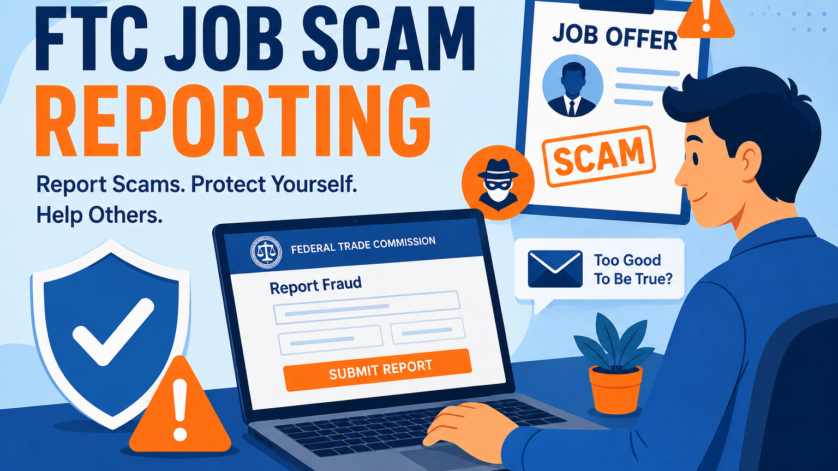
Searching for a new job should be exciting, but unfortunately, online job scams have become increasingly common. Fake employers, phishing schemes, and fraudulent remote job listings target job seekers every day. Knowing how to recognize and report these scams is one of the best ways to protect yourself and help prevent others from becoming victims.
If you encounter a suspicious job posting, fake recruiter, or scam interview, it’s important to take action quickly. The Federal Trade Commission (FTC) provides tools and resources to help consumers report fraud and identity theft related to employment scams.
What Is a Job Scam?
A job scam is a fraudulent employment opportunity designed to steal money, personal information, or financial account details from job seekers. These scams can appear on job boards, social media platforms, email messages, and even professional networking websites.
Scammers often pretend to represent legitimate companies and may create convincing fake websites, recruiter profiles, or interview processes to gain trust.
Remote job scams continue to evolve, especially as more companies hire online. To better recognize warning signs before applying, read our guide on Common Remote Job Scams to Avoid.
Common job scam tactics include:
- Asking for payment for training, equipment, or background checks
- Requesting sensitive information such as Social Security numbers or bank account details too early
- Offering unrealistically high pay for minimal work
- Conducting interviews only through messaging apps or text
- Sending fake checks for “office equipment”
- Pressuring applicants to act immediately
- Signs a Job Posting May Be Fake
While scammers continue to evolve their tactics, there are several common red flags job seekers should watch for.
Unrealistic Salary Offers
If a job promises extremely high pay for little experience or minimal work, it may be fraudulent. Scam listings often use attractive salaries to lure applicants quickly.
Poor Communication or Grammar
Many fake recruiters use generic emails, copied job descriptions, or messages filled with spelling and grammar mistakes.
Requests for Personal Information
Legitimate employers generally do not ask for banking information, copies of identification, or payment details during the early stages of hiring.
Legitimate employers follow professional hiring practices and typically avoid requesting sensitive financial information early in the hiring process. Learn more in our article on What Employers Will Never Ask For.
Interviews Through Messaging Apps Only
Be cautious if a recruiter refuses phone or video interviews and insists on communicating exclusively through apps like Telegram, WhatsApp, or Signal.
Upfront Payments
Real employers do not require candidates to pay for job opportunities, certifications, or equipment before starting work.
How to Report a Job Scam to the FTC
If you believe you’ve encountered a fraudulent job listing or scam recruiter, reporting it can help investigators track patterns and potentially stop scammers from targeting others.
The FTC accepts fraud reports through its official reporting website.
Gather Evidence First
Before submitting a report, collect as much information as possible, including:
- Job posting screenshots
- Recruiter names and email addresses
- Company names used by scammers
- Phone numbers or messaging app usernames
- Payment requests or fake checks
- Website URLs
- Copies of suspicious emails or messages
Keeping detailed records can strengthen your report and help authorities identify recurring scams.
Submit a Report Online
You can report fraudulent activity directly through the official FTC fraud reporting portal:
The reporting process allows you to describe the scam, upload details, and explain how the scammer contacted you.
Report Identity Theft Separately
If you shared sensitive personal information such as your Social Security number, banking information, or copies of identification documents, you should also visit:
This government resource helps victims create recovery plans and monitor potential identity theft issues.
Other Places to Report Job Scams
In addition to the FTC, job scams can often be reported to the platform where the listing appeared.
Job Boards
Most major job boards have reporting systems for suspicious listings. Reporting fake jobs helps remove them faster and protects other applicants.
Popular platforms include:
Your State Attorney General
Many state attorney general offices investigate online fraud and consumer scams. Filing reports locally may assist with broader investigations.
Local Law Enforcement
If you lost money or became the victim of identity theft, consider filing a police report for documentation purposes.
How to Protect Yourself During Your Job Search
Avoiding scams starts with staying cautious and verifying opportunities before sharing information.
Taking a few extra minutes to research a company can prevent major problems later. If you are unsure whether a posting is legitimate, check out our step-by-step guide on How to Verify a Remote Job Listing before submitting your application.
Research Every Company
Search for the company’s official website, employee reviews, and verified contact information. Compare recruiter email addresses carefully, as scammers often use fake domains that closely resemble real companies.
Never Pay for a Job
Legitimate employers will not ask applicants to pay upfront fees for employment opportunities.
Verify Recruiters Independently
If you receive a suspicious message, visit the company’s official website and contact the business directly to confirm whether the recruiter actually works there.
Use Trusted Job Boards
Reputable job boards typically have stronger moderation systems and fraud detection measures in place.
Final Thoughts
Job scams continue to rise as more hiring moves online, especially in the remote work market. Staying informed, recognizing red flags, and reporting suspicious activity can help protect both your finances and your personal information.
If you encounter a fake recruiter or suspicious job posting, report it immediately through the FTC and the platform where the listing appeared. Taking a few minutes to file a report could help prevent someone else from becoming the next victim.
For more job search safety tips, remote work advice, and legitimate career opportunities, continue exploring our latest resources and verified job listings.